
RCD Test Button Does Nothing When Pressed? Here's What That Means

TL;DR
If your RCD test button does nothing when pressed, this usually means the RCD itself has failed, not that everything is fine.
A test button producing no trip is one of the clearest early warning signs of a faulty device, a wiring fault, or an incorrectly specified RCD.
This is not something to note and check again next month. Treat it as a fault that needs investigating promptly.
Under BS 7671, RCDs form part of a building's protection against electric shock, so a non-functioning test button can affect your compliance position.
The next step is a professional inspection to confirm whether the RCD needs replacing or whether there is a wider wiring issue behind it.
If you have pressed the RCD test button and nothing happened, in most cases this means the RCD has failed and needs attention, not that your electrical system is fine. A working RCD should trip immediately when the test button is pressed, cutting power to the circuit it protects. When an RCD test button does nothing, it usually points to one of a small number of causes: a dead or worn-out device, a wiring fault, or occasionally a downstream issue masking the test signal. As the Responsible Person for a building, this is worth acting on promptly rather than leaving until the next scheduled test.
What Does It Mean When an RCD Test Button Does Nothing?
When you press the test button and the RCD does not trip, it means the device has stopped performing its core safety function. The test button works by simulating a small earth fault inside the RCD. If the device is working correctly, it detects that simulated fault and disconnects the circuit within milliseconds. No trip at all tells you the mechanism responsible for detecting real faults, the kind that could cause an electric shock, is not responding either.
This is different from an RCD that trips too often or trips for no obvious reason. A nuisance-tripping RCD is still doing its job, just too sensitively. An RCD test button that does nothing is a device that may no longer protect anyone at all.
Why Might an RCD Fail to Trip on Test?
There are a handful of common reasons an RCD test button produces no response. A short visual and functional check can narrow things down before a qualified electrician gets involved.
A Faulty or Worn RCD
RCDs are mechanical and electronic devices with a working life. Age, heat, vibration, or a previous fault current can wear out the internal trip mechanism so it no longer responds, even though the device still appears to supply power normally.
A Wiring or Connection Fault
Loose connections, damaged neutral wiring, or an incorrectly wired circuit can prevent the test button's simulated fault from registering. In some cases the RCD itself is fine, but the fault lies in how it has been installed or connected.
The Wrong Type or Rating of RCD for the Circuit
An RCD rated or specified incorrectly for the load or circuit it protects may not respond to a standard test in the way you would expect. This is more common on older installations or where equipment has been added to a circuit since the RCD was first fitted.
Mechanical Failure of the Test Button Itself
Occasionally the test button mechanism fails while the RCD's actual protective function still works. This is harder to diagnose without testing equipment, which is one reason a professional check matters rather than assuming the whole device is dead.
Is This a Compliance Failure Under BS 7671?
Monthly RCD test button checks are a requirement under BS 7671 for Responsible Persons managing non-domestic and let residential premises. A test button that does nothing when pressed is a finding that should be recorded and acted upon, not something to quietly note and move past. If a subsequent Electrical Installation Condition Report identifies the same fault, it is likely to be coded as a departure from BS 7671 requiring remedial action, depending on the specific circuit and installation. Documenting the date you found the fault and the steps you took afterwards also supports your golden thread of compliance evidence.
Is It Safe to Keep Using the Building If the RCD Won't Trip?
A building can usually continue operating while the fault is investigated, but the circuit protected by that RCD no longer has additional shock protection beyond standard fusing or circuit breaker protection. For circuits feeding bathrooms, kitchens, outdoor sockets, or areas with a higher risk of contact with water or damaged cabling, this gap matters more. Treat a non-responsive RCD test button as a priority finding rather than a routine observation, and arrange for a qualified electrician to assess it as soon as reasonably possible.
What Should You Do Next?
Record the date, the circuit affected, and what you observed when you pressed the test button. Avoid repeatedly testing the same button, as this will not resolve the underlying issue and can, in rare cases, cause further wear. Arrange a professional RCD testing inspection so a qualified electrician can confirm whether the device needs replacing or whether there is a wiring fault behind it. If the inspection identifies a wider issue, our electrical remedial repairs team can carry out the fix and re-test the circuit to confirm it is working correctly.
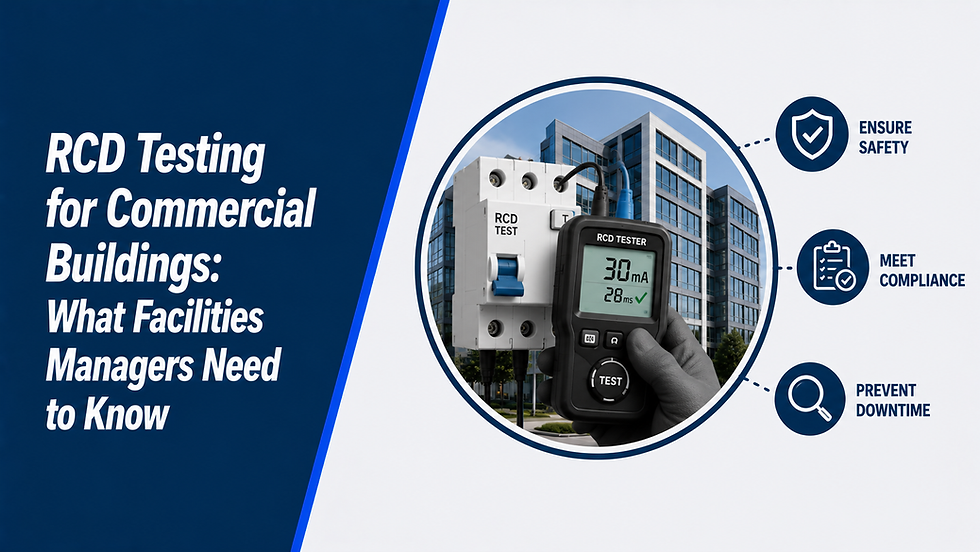
If this fault is picked up during a routine Electrical Installation Condition Report, it helps to understand what the different EICR codes mean so you know how urgently it needs addressing. For a broader look at how RCD checks fit into your wider testing obligations, our guide on RCD testing for commercial buildings covers what facilities managers are expected to do and how often.
How Do RCD Test Buttons Fit Into Wider Electrical Testing?
RCD test button checks are a monthly, low-cost way of catching a serious fault early, but they are not a substitute for a full fixed wire testing inspection, which examines the whole installation in far greater depth. If your monthly checks keep turning up problems, or you cannot remember the last time a full inspection was carried out, it is worth bringing both into a single conversation with your electrical compliance provider rather than treating them separately.
Frequently Asked Questions
Why does my RCD test button do nothing when I press it?
This usually means the RCD has developed a fault and is no longer detecting the simulated earth fault created by the test button. Common causes include a worn or failed device, a wiring fault, or an RCD that is not correctly rated for the circuit it protects.
Is it dangerous if the RCD test button doesn't trip?
It can be. The RCD is there to protect people from electric shock if a real fault occurs, and if the test button produces no response, that protection may no longer be working. It is worth having the fault investigated promptly rather than assuming the risk is minor.
Can I keep using the building if the RCD won't trip on test?
In most cases you can continue operating while the fault is investigated, but the affected circuit will not have the extra shock protection an RCD normally provides. Areas with water, outdoor sockets, or older wiring carry more risk, so treat it as a priority rather than a routine note.
How often should I test my RCD test button?
BS 7671 recommends testing accessible RCD test buttons monthly for non-domestic and let residential premises. Keeping a simple log of the date and result helps demonstrate ongoing compliance.
What's the difference between an RCD that won't trip and one that trips too often?
An RCD that trips too often, sometimes called nuisance tripping, is still detecting faults, just too sensitively for the circuit. An RCD test button that does nothing suggests the device has stopped detecting faults altogether, which is generally the more serious of the two.
Do I need an electrician to fix an RCD that doesn't trip on test?
Yes. Diagnosing whether the fault lies in the RCD itself, the wiring, or the test mechanism requires proper testing equipment and electrical competence. A qualified electrician can confirm the cause and carry out any remedial work safely.
Does a faulty RCD test button affect my EICR result?
It can. If the same fault is present when an Electrical Installation Condition Report is carried out, it is likely to be recorded as a departure from BS 7671 requiring remedial action, with the exact classification depending on the circuit and installation.




.png)