
Central Battery Fault Light on Your Emergency Lighting Panel? Here's What It Means

TL;DR
A central battery fault light almost always means one of three things: a charger fault, a battery fault, or a lamp or circuit fault reported back from a fitting on the circuit.
The colour and position of the light narrows it down. Amber usually points to a charging or circuit issue, red usually means the battery itself has failed a test.
A single fault light does not always require the whole system to be replaced. Many faults are isolated to one circuit, one fitting, or one ageing battery string.
You cannot legally ignore it. Under BS 5266-1, an unresolved fault on a central battery system is a compliance failure that should be logged and actioned, not reset and forgotten.
Some faults are a five-minute reset. Others need a competent engineer on-site before your next test cycle. This article shows you how to tell the difference.
You Walk Past the Panel and See an Amber or Red Light You Don't Recognise
A fault light on a central battery emergency lighting panel means the system has detected a problem with the charger, the battery, or one of the circuits it feeds. It does not mean the whole building has lost emergency lighting, but it does mean part of the system's safety function is compromised until the fault is cleared.
If you manage a building with a central battery emergency lighting system, at some point you will walk past the panel in the plant room or riser cupboard and notice an indicator lit up that was not there last week. That is the moment this article is for.
This guide explains what the light is actually reporting, why central battery systems behave differently to the self-contained emergency lights most facilities managers are more familiar with, and what you need to do next.
Central Battery Systems Are Not the Same as Self-Contained Fittings
Most of the emergency lighting content you will find online, including our own guides on emergency lights that won't turn off or fittings that fail a duration test, covers self-contained emergency lights. Each of those has its own small battery sitting inside the fitting itself.
A central battery system works differently. One large battery bank, usually housed in a dedicated cabinet or panel, supplies power to dozens or hundreds of emergency light fittings across a building through a dedicated wiring circuit. The panel itself is the brain of the system. It monitors the battery, the charger, and the circuits, and it reports back through a set of indicator lights.
This is why a fault on a central battery system shows up as a light on the panel rather than a flickering fitting in a corridor. The panel is designed to centralise fault reporting so one person checking one cabinet can understand the health of the entire installation, rather than someone having to walk every corridor testing every fitting by hand.
What Does a Central Battery Fault Light Actually Mean?
A fault light on a central battery panel means the control system has detected a problem it cannot resolve on its own, and it needs a person to look at it. It is not a false alarm indicator and it does not reset itself once the underlying issue is fixed.
Most central battery panels report faults using a mix of colour and label, and the three most common categories are a charger fault, a battery fault, and a lamp or circuit fault.
Charger Fault
A charger fault means the panel cannot properly charge the central battery. This is usually shown as an amber light, sometimes labelled "charger fault" or with a plug or lightning bolt symbol. Common causes include a tripped charger circuit, a blown fuse in the charging unit, or the charger unit itself reaching the end of its working life.
Battery Fault
A battery fault means the central battery has failed an internal test, usually during a periodic self-test the panel runs automatically. This is typically shown as a red light. It can mean one or more cells within the battery bank have dropped below the voltage the system expects, which usually points to the battery reaching the end of its service life, commonly around four to six years depending on the type and how heavily it has been used.
Lamp or Circuit Fault
A lamp or circuit fault means one of the fittings connected to the central battery system, or the wiring circuit that feeds it, has reported a problem back to the panel. This is often shown as a separate zone or circuit indicator rather than a single system-wide light. It usually means a lamp has failed, a fitting has been damaged, or there is a wiring fault somewhere along that specific circuit.
Is This a Compliance Failure?
Yes. Under BS 5266-1, the code of practice for emergency lighting in the UK, a central battery system with an unresolved fault is not providing verified emergency lighting cover, even if some fittings are still working. Our guide to whether your emergency lighting testing is compliant with BS 5266 covers this standard in more depth. The Responsible Person under the Regulatory Reform (Fire Safety) Order 2005 has a legal duty to ensure emergency lighting is maintained in efficient working order, and an active fault light is direct evidence that it currently is not.
This does not mean you need to evacuate the building or shut anything down. It means the fault needs to be logged in your emergency lighting log book the moment it is noticed, and it needs to be investigated and remedied within a reasonable timeframe, not left until the next scheduled service visit months away.
What Should You Do Next?
The first step is always the same: do not silence or reset the fault indicator without recording what it said first. Note the exact wording or symbol shown, the time and date, and whether it is a system-wide light or tied to a specific zone or circuit number. This information tells your engineer exactly where to start.
Next, check whether your central battery panel has a simple, documented reset procedure in its manual for minor faults, such as a nuisance trip after a power cut. If it does, and the fault clears and stays clear, log this as an event in your emergency lighting log book. If the fault returns, or if you are not confident diagnosing it yourself, this is the point to call a competent engineer rather than keep resetting the panel.
Do not attempt to open the battery cabinet or work on the charging circuit yourself unless you are a qualified engineer. Central battery systems carry significant stored energy and charging voltages that are not safe to work on without the right training and isolation procedures.
Finally, get the fault properly diagnosed and remedied before your next scheduled emergency lighting test, rather than waiting for the test to flag it again. A fault that has already been identified and left unresolved looks far worse at audit than one that was caught and fixed promptly.
How Often Should Central Battery Systems Be Tested and Serviced?
BS 5266-1 recommends a monthly function test, where the system is switched to simulate mains failure for a short period to check the lights operate, and an annual full duration test, where the system runs on battery power for its full rated duration, typically one to three hours depending on the building's fire strategy.
Central battery systems benefit from more frequent professional servicing than self-contained fittings because a single central battery failure affects far more of the building at once. Many facilities managers schedule a competent engineer visit twice a year in addition to their own monthly in-house checks, so that battery condition and charger performance are assessed before they trigger a fault light rather than after. Our emergency lighting testing service covers both routine function testing and full annual duration testing for central battery systems.
Common Causes of Central Battery Faults We See on Site
In our experience carrying out emergency lighting testing and remedial work across commercial buildings, the most frequent causes of central battery fault lights are ageing batteries reaching the end of their rated life, charger units that have not been serviced or replaced on schedule, loose or corroded connections at the battery terminals, and circuit faults caused by building works or cabling damage elsewhere in the installation.
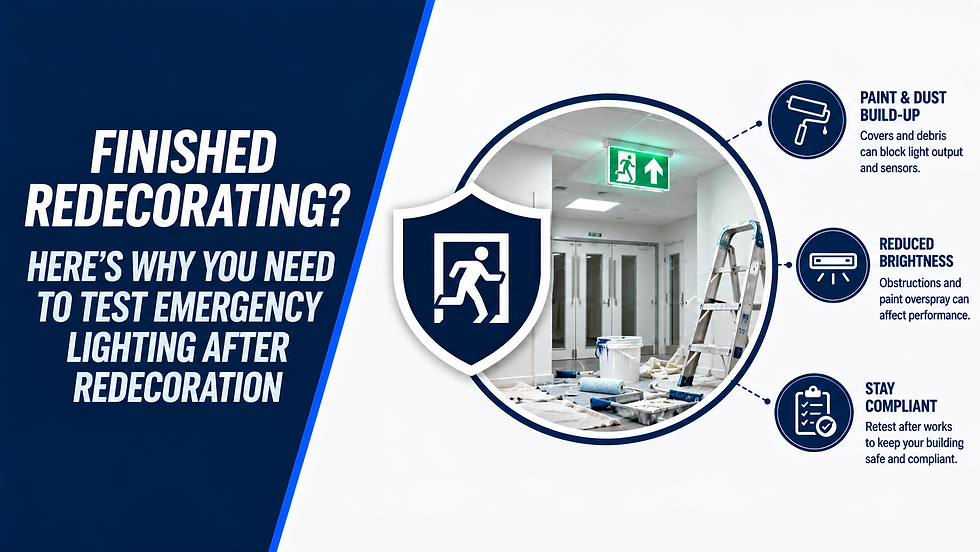
Buildings that have had recent refurbishment work, new partitions, or ceiling alterations are particularly prone to circuit faults, because cabling for the emergency lighting circuit can be disturbed, nicked, or disconnected without anyone realising until the panel reports it. This is a pattern we see regularly across the facilities management sector, where planned works elsewhere in a building have unintended knock-on effects on life safety systems.
Frequently Asked Questions
What does a red light on my emergency lighting panel mean?
A red light on a central battery panel usually indicates a battery fault, meaning the battery has failed an internal test or one of its cells has dropped below the expected voltage. This often means the battery is reaching the end of its service life and needs replacing.
Can I just reset the fault light myself?
You can reset the indicator if the panel manual describes a simple reset procedure for minor faults, but you should always log what the fault said first. If the fault returns after resetting, or you are not sure what caused it, call a qualified engineer rather than continuing to reset it.
Is a central battery fault light a fire safety breach?
Yes, under BS 5266-1 and the Regulatory Reform (Fire Safety) Order 2005, an unresolved fault on your emergency lighting system counts as a compliance failure that must be logged and remedied promptly, even if it does not require an immediate evacuation.
How long do central battery emergency lighting batteries last?
Most central battery systems use batteries rated for four to six years of service, depending on the battery chemistry and how often the system has been discharged during testing or real power cuts. Age is one of the most common causes of a battery fault light.
Why is my emergency lighting panel showing a fault on only one circuit?
A single circuit or zone fault usually means the problem is isolated to the fittings or wiring on that specific circuit rather than the central battery itself. This is common after building works, cable damage, or a single failed lamp reporting back to the panel.
Do I need a specialist to fix a central battery fault?
Diagnosing and fixing faults inside the battery cabinet or charging circuit should always be done by a competent, qualified engineer, because central battery systems hold significant stored energy. Simple documented resets described in the panel manual can usually be done in-house.
How quickly do I need to get a central battery fault fixed?
There is no fixed legal deadline in hours or days, but the Responsible Person must act within a reasonable timeframe once a fault is identified. Leaving a logged fault unresolved until the next scheduled test is generally viewed as unacceptable if the building is inspected or audited in the meantime.


.png)