
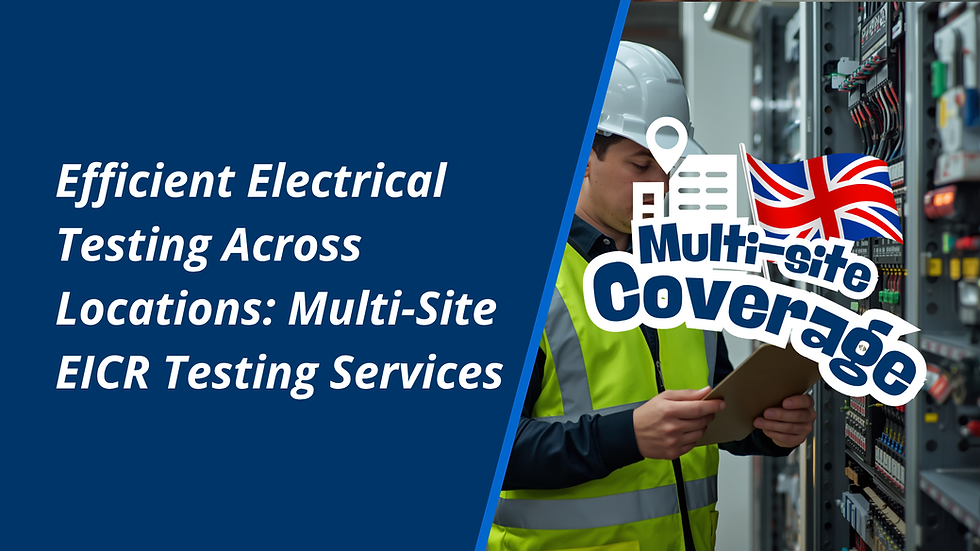
Efficient Electrical Testing Across Locations: Multi-Site EICR Testing Services
Ensuring electrical safety across multiple commercial sites is a complex task. It requires careful planning, coordination, and expert execution. Electrical Installation Condition Reports (EICRs) are essential for maintaining compliance and safety. But when you manage several locations, how do you keep the process efficient and hassle-free? That’s where efficient electrical testing across locations comes in.
In this post, I’ll walk you through the benefits and best practices of managing electrical testing across multiple sites. I’ll also explain how combining services can save time and reduce disruption. Let’s dive in.
Why Electrical Testing Across Locations Matters
Managing electrical safety in one building is straightforward. But when you have dozens or even hundreds of sites, things get complicated fast. Each location has its own unique setup, usage patterns, and risks. Coordinating inspections and repairs across all these sites can be a logistical nightmare.
Regular EICR testing is a legal requirement for commercial properties. It helps identify faults, wear, and potential hazards before they cause accidents or downtime. For businesses with multiple sites, consistent testing ensures that every location meets safety standards and avoids costly penalties.
Here are some key reasons why electrical testing across locations is critical:
Compliance: Staying up to date with regulations like BS 7671 and the Electricity at Work Regulations.
Safety: Protecting staff, visitors, and assets from electrical hazards.
Cost Control: Preventing expensive emergency repairs and insurance claims.
Operational Continuity: Minimising downtime by scheduling tests efficiently.

How to Streamline Electrical Testing Across Multiple Sites
The biggest challenge with multi-site electrical testing is coordination. Without a clear plan, you risk overlapping appointments, inconsistent reporting, and delays. Here are some practical steps to make the process smoother:
1. Centralise Scheduling and Communication
Use a single point of contact or a dedicated team to manage all testing appointments. This reduces confusion and ensures that every site is covered on time. Digital tools like shared calendars and project management software can help track progress and deadlines.
2. Standardise Testing Procedures
Agree on a consistent testing protocol for all sites. This includes the scope of the EICR, the standards to follow, and the format of reports. Standardisation makes it easier to compare results and identify trends across locations.
3. Combine Services Where Possible
If you need other compliance checks, such as fire protection or switchgear inspections, try to schedule them on the same day. This reduces site visits and minimises disruption to your operations.
4. Use Experienced Contractors
Choose contractors who specialise in multi-site projects. They understand the complexities and can deploy teams efficiently. Their expertise helps avoid common pitfalls and ensures high-quality results.
5. Plan for Follow-Up Work
Electrical testing often reveals issues that require repairs or upgrades. Have a clear process for prioritising and scheduling this work. This keeps your sites safe and compliant without unnecessary delays.
The Role of Multi-Site EICR Testing Services
When managing multiple locations, you want a partner who can handle the entire process seamlessly. That’s where multi-site eicr testing services come in. These services specialise in delivering electrical testing across locations with efficiency and consistency.
They offer several advantages:
Single Contract, Multiple Sites: One agreement covers all your properties, simplifying procurement and administration.
Coordinated Scheduling: Testing teams are deployed strategically to cover sites in logical sequences.
Consolidated Reporting: You receive uniform reports that make compliance management easier.
Integrated Services: Often combined with other compliance checks, saving time and cost.
By working with a specialist provider, you reduce the burden on your internal teams and ensure your electrical compliance is handled professionally.

Practical Tips for Facilities Managers and Procurement Leads
If you’re responsible for overseeing electrical compliance across multiple sites, here are some actionable recommendations:
Audit Your Portfolio: Know exactly how many sites you have and their testing history. This helps prioritise and plan.
Set Clear Expectations: Define the scope, frequency, and standards for testing upfront with your contractor.
Leverage Technology: Use software to track inspections, certificates, and remedial actions.
Communicate with Site Teams: Ensure local staff know when testing will happen and what to expect.
Review Reports Thoroughly: Don’t just file certificates away. Analyse findings to spot recurring issues or risks.
Budget for Repairs: Allocate funds for follow-up work identified during testing to avoid surprises.
By taking these steps, you can maintain a robust electrical safety programme that supports your business goals.
Looking Ahead: Maintaining Compliance and Safety
Electrical safety is not a one-time task. It requires ongoing attention and adaptation. Regulations evolve, equipment ages, and usage patterns change. Efficient electrical testing across locations helps you stay ahead of these challenges.
Remember, the goal is not just to tick boxes but to create a safe environment for everyone. By investing in coordinated, professional testing services, you protect your people and your business.
If you want to simplify your electrical compliance management, consider partnering with a provider that offers multi-site eicr testing services. Their expertise and integrated approach can save you time, reduce risk, and deliver peace of mind.
We hope this guide helps you understand the importance of efficient electrical testing across multiple sites. If you have any questions or want to explore how to implement these strategies, feel free to reach out. Safety and compliance are achievable goals with the right approach.
Frequently Asked Questions: Multi-Site EICR Testing
How often do commercial properties require multi-site EICR testing?
Under the Electricity at Work Regulations 1989, most commercial environments require a formal Electrical Installation Condition Report (EICR) every 5 years. However, higher-risk environments—such as industrial units or sites with high public footfall—may require more frequent inspections to maintain safety and insurance compliance.
Can I consolidate electrical testing for all my locations into one contract?
Yes. Choosing a multi-site EICR testing service allows you to manage your entire portfolio under a single agreement. This centralises your billing, standardises the reporting format across all sites, and provides a dedicated point of contact for easier communication.
Will electrical testing cause downtime for my business operations?
Professional contractors use "phased testing" to minimise disruption. By scheduling inspections during off-peak hours or testing circuits in stages, the majority of your business operations can continue as normal. Combining EICR with other services like fire protection audits can also reduce the total number of site visits.
What are the legal risks of failing to maintain EICR compliance across multiple sites?
Failure to produce a valid EICR can lead to significant legal and financial consequences. This includes unlimited fines, the invalidation of business insurance policies, and potential prosecution under the Health and Safety at Work Act if an electrical accident occurs on-site.
How do I manage remedial works found during multi-site inspections?
A centralised reporting system is key. Following your EICR, you will receive a list of "Observations" (coded C1 to C3). A specialist multi-site provider will help you prioritise these repairs across your portfolio, ensuring that urgent Category 1 (Danger Present) issues are addressed immediately across all locations.
Is it cheaper to book multi-site electrical testing than individual site visits?
Generally, yes. Procuring testing services at scale often results in volume-based discounts. Additionally, the administrative costs are significantly lower when you manage one coordinated project rather than juggling multiple local contractors with different pricing structures.
How does standardising reports help with compliance audits?
Standardised reporting ensures that every site manager and auditor is looking at the same data format. This makes it much easier to track "compliance percentages" across your company and quickly prove to stakeholders or HSE inspectors that your entire estate meets BS 7671 standards.


.png)