
Fire stopping, Fireblocking, Draftstopping: What's the Difference?
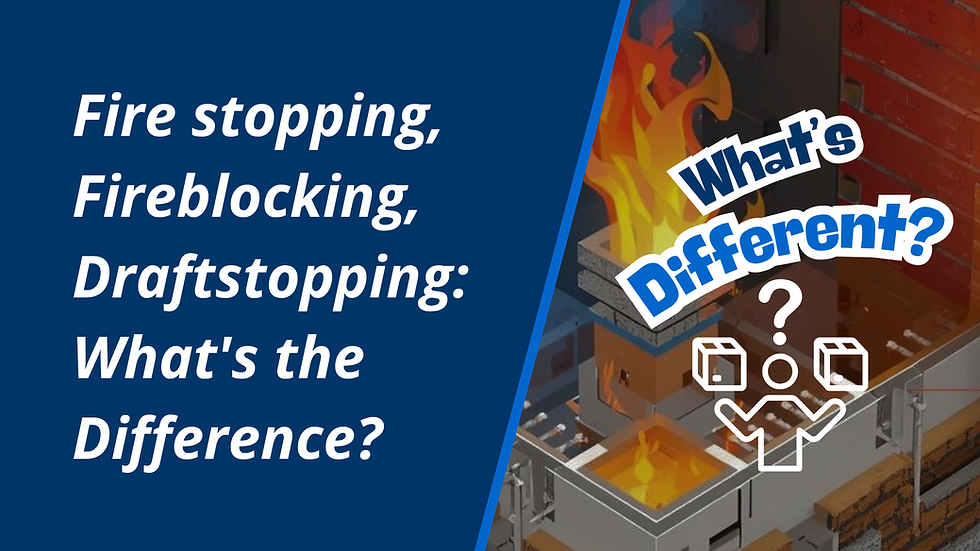
When we talk about keeping buildings safe from fire, there are a few terms that get tossed around, and honestly, they can be a bit confusing. We're talking about fire stopping, fireproofing, fireblocking, and draftstopping. They all sound similar, right? But they actually do different jobs to protect us. Let's break it down.
Key Takeaways
Firestopping: Seals up holes and joints in fire-rated walls and floors to keep the hourly rating intact.
Fireproofing: Protects the building's structure, like steel beams, so they don't fail when exposed to fire.
Fireblocking: Uses simple materials to block fire and hot gases from moving through hidden spaces.
Draftstopping: Divides large hidden areas like attics to slow down smoke and fire.
What Is Fire stopping?
Fire stopping is all about restoring the fire-resistance rating of those parts of a building that have been compromised. Think about walls or floors that are designed to hold back fire for a certain amount of time – say, an hour or two. When you drill holes for pipes, wires, or cables, or when different parts of the building meet at a joint, you create a path for fire and smoke. Firestopping fills these gaps and penetrations to put that fire rating back where it belongs. It's like patching up holes in a shield to make sure it can still protect you.
Understanding Fireproofing
Fireproofing is a bit different. Instead of sealing gaps, it's about treating the building's actual structure to make it resistant to fire. The most common example is protecting steel beams. Steel can lose its strength and start to bend or even melt in a fire, which could cause the whole building to collapse. Fireproofing materials, like spray-on coatings, are applied to these structural elements to give them time to withstand the heat and keep the building standing during a fire.
The Role of Fireblocking
Fireblocking uses more basic materials to stop fire from spreading through hidden spaces. You might find these in wall cavities, floor spaces, or ceiling voids. The idea is to put up a barrier that slows down or stops fire and hot gases from travelling from one area to another. Common materials for fireblocking include things like wood, gypsum boards, or mineral wool. It's a simpler way to compartmentalize a building and prevent a small fire from quickly taking over.
What About Draftstopping?
Draftstopping is quite similar to fireblocking, but it's specifically used to divide up large concealed spaces. Imagine big attics or crawl spaces. Without draftstopping, fire and smoke could travel easily across these large open areas. Draftstopping creates barriers within these spaces to limit the movement of air, smoke, and fire. This is especially important in combustible construction, like wood framing, to prevent rapid fire spread.




.png)